About us
Our commmunity
Royal Docks feels different to much of East London. It is not defined by streets in the traditional sense, but by water, sky, and scale. The result is a landscape that feels unusually open for London, where distance is visible and movement is often measured against horizon lines rather than junctions or high roads. It is a place shaped first by infrastructure and industry, and only more recently by residential life, which gives it a quality of something still quietly forming.
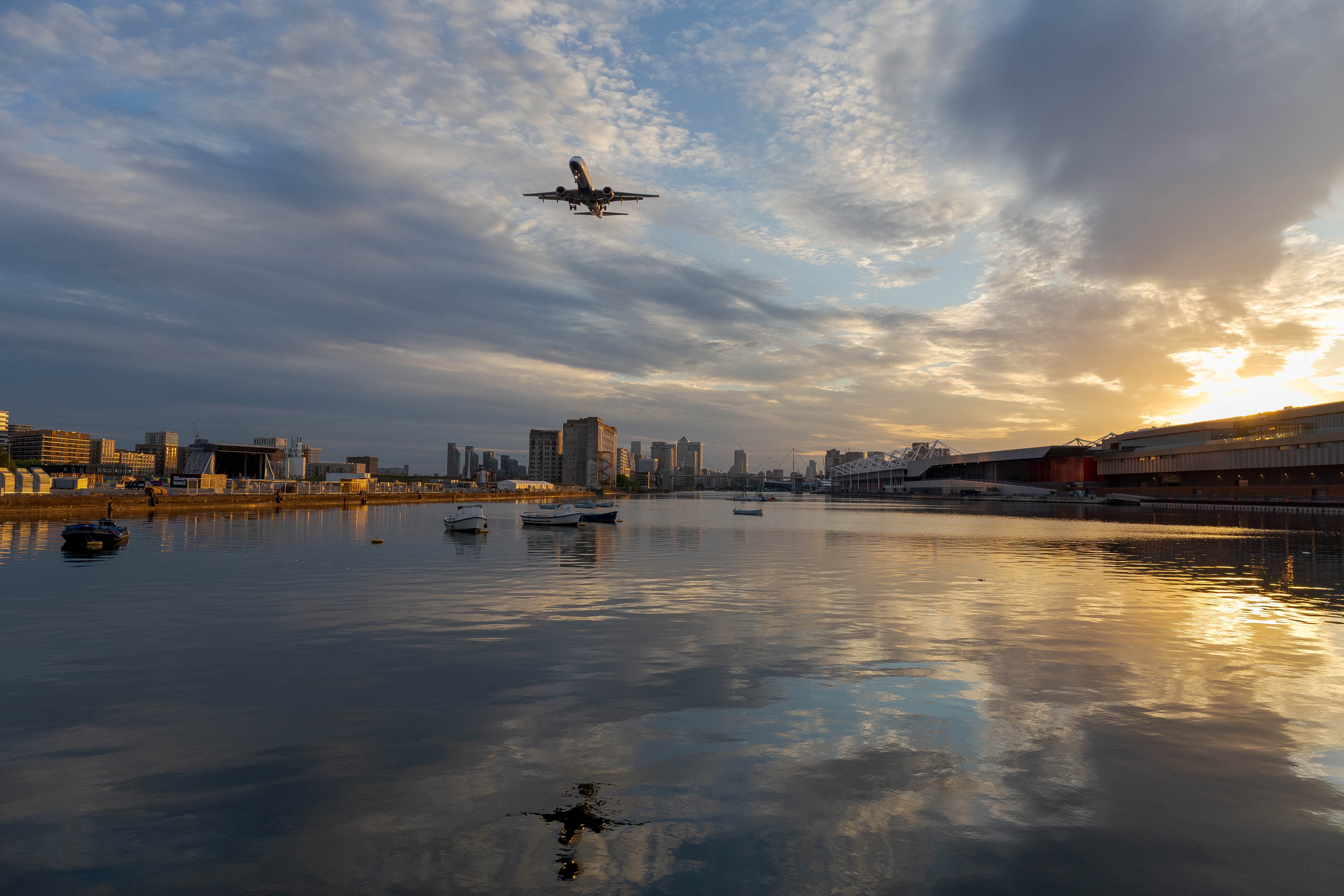
There is a clarity to the environment that is immediate. The Royal Victoria Dock in particular sets the tone, long stretches of water framed by walkways that feel generous in proportion. Light behaves differently here. It reflects, expands, and shifts across the surface of the dock in a way that makes everyday movement feel slightly slower, more considered. Morning and evening routines unfold alongside joggers, commuters, and residents moving through the same shared edge of water without interruption.
Around ExCeL London, the rhythm changes depending on the calendar. On event days, the area becomes animated with visitors, exhibitions, conferences, and a steady flow of arrivals and departures. Between those periods, it returns to something more subdued, almost suspended. The infrastructure remains constant, but the intensity of use rises and falls, giving the area a dual character, part civic destination, part quiet waterfront.
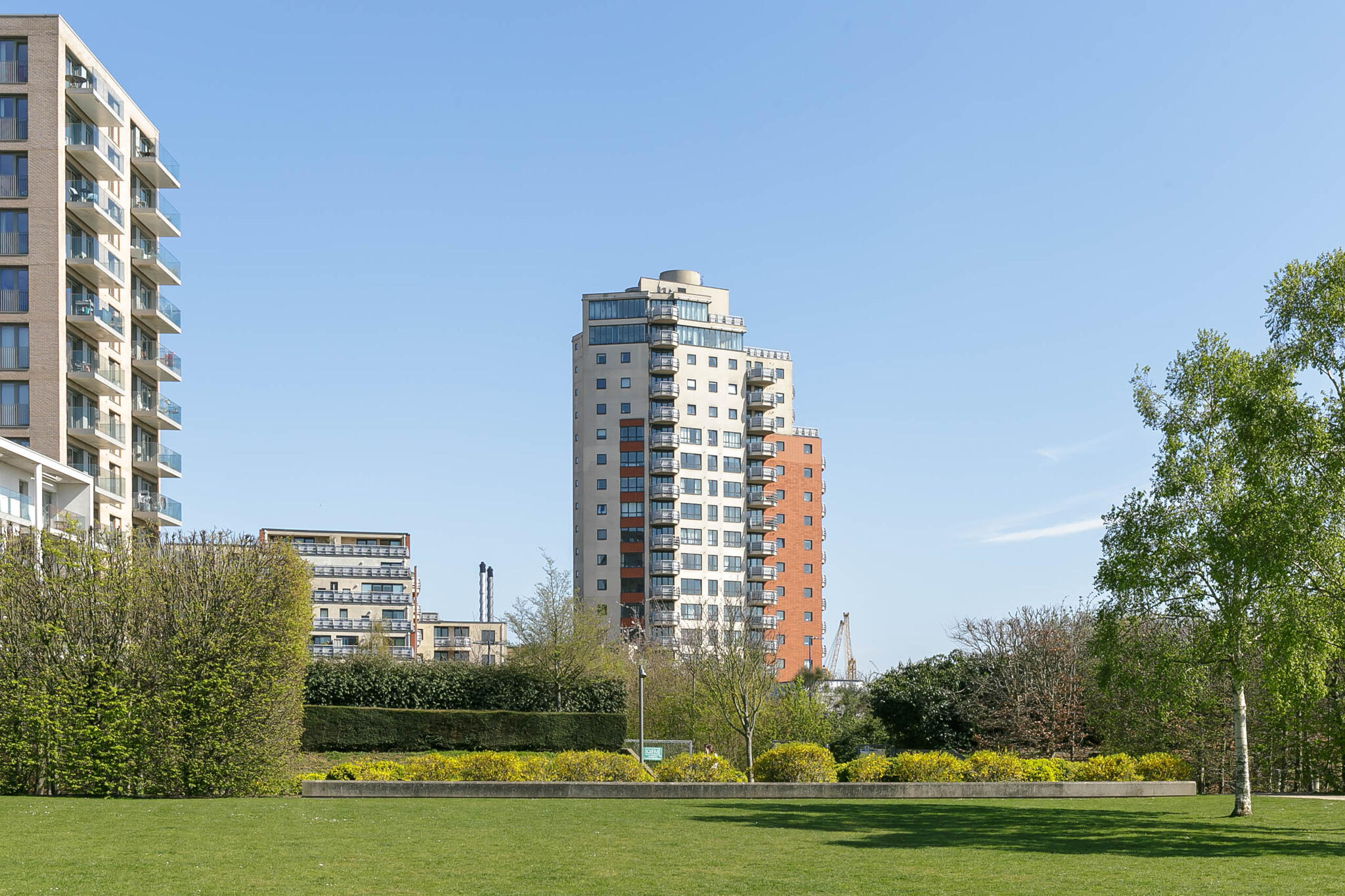
Royal Victoria Dock forms the most established residential and public-facing part of the wider Royal Docks. New apartment buildings sit alongside hotels and event spaces, creating a mixed environment where daily life and temporary visitation overlap. The waterside paths are used continuously, not as a backdrop but as a working route through the neighbourhood, connecting buildings, transport links, and open space in a linear flow.
Custom House introduces a more transitional tone. It is defined less by the dockside itself and more by its role as a connector. The arrival of the Elizabeth line has reshaped its position within London, compressing distances to Canary Wharf, the West End, and Heathrow. As a result, the area feels increasingly integrated into wider city movement, while still retaining a sense of space that comes from its proximity to the docks.
Canning Town, to the west, brings a different energy again. This is the most densely developed and actively evolving part of the Royal Docks perimeter. Large scale regeneration has introduced new residential blocks, public spaces, and retail areas alongside long established housing and infrastructure. Hallsville Quarter has become a focal point, bringing everyday amenities into a structured, modern framework. Despite this growth, the area remains defined by transition, with layers of old and new sitting in close proximity.
Silvertown extends that sense of evolution along the river. Historically industrial, it retains a more raw architectural language, with warehouses, infrastructure, and open land gradually being reworked into new residential and mixed use schemes. Thames Barrier Park introduces a more controlled landscape within this context, offering wide lawns, planting schemes, and direct views towards one of London’s most recognisable pieces of river infrastructure. The contrast between engineered protection and open water gives this part of the docks a distinctive atmosphere.
Further east, North Woolwich softens the tone again. It feels more residential and detached from the larger scale developments elsewhere in E16. Streets are quieter, movement is slower, and the connection to the river feels more immediate and local. The Woolwich Ferry and nearby crossings reinforce its position as a threshold between north and south London rather than a destination defined by intensity.
Royal Wharf and Pontoon Dock represent the most recent layer of residential development within the Royal Docks. Here, planning has been more structured, with riverside apartments, landscaped walkways, cafés, and community facilities forming a more contained neighbourhood rhythm. Living in Royal Docks here feels oriented towards the water, with long views, open promenades, and a consistent sense of space between buildings. It is orderly, but not static, still closely tied to the wider evolution of the docks.
What defines Royal Docks as a whole is not a single centre, but the relationship between these distinct environments. Water acts as the constant thread, linking industrial history, civic infrastructure, and new residential life. Unlike more tightly woven parts of East London, this is a place where distance is part of the experience. You move through it rather than into it, with transitions marked by changes in scale rather than abrupt shifts in character.
Transport reinforces this sense of connectivity without compression. The DLR runs through Royal Victoria, Custom House, and Prince Regent, creating a linear connection across the docks. The Jubilee line at Canning Town links directly into Canary Wharf and central London, while the Elizabeth line at Custom House places the area within a much broader regional network. Despite this level of access, the experience on the ground remains defined by openness rather than density.
There is also a strong sense of infrastructure as landscape. Airports, bridges, tunnels, and dockside engineering are not hidden here, they are visible parts of the environment. London City Airport introduces movement overhead, while the Thames Barrier marks the edge of tidal control and river management. These elements contribute to a feeling that the Royal Docks is a working part of London as much as a residential one.
In its current form, Royal Docks feels like a place in continued transition. Large parts are established, particularly around Royal Victoria Dock and Royal Wharf, while others remain in active redevelopment. This creates a layered environment where completed residential schemes sit alongside construction, open land, and long standing industrial infrastructure.
For those who live here, the defining quality becomes space. Not just physical space, but visual and atmospheric space, the ability to see further, move more directly, and experience London at a slightly different scale. For those arriving for the first time, it is often this openness that stands out most clearly.
Royal Docks does not present itself as finished. It presents itself as open, structured by water, shaped by infrastructure, and continually evolving within its own expansive frame.